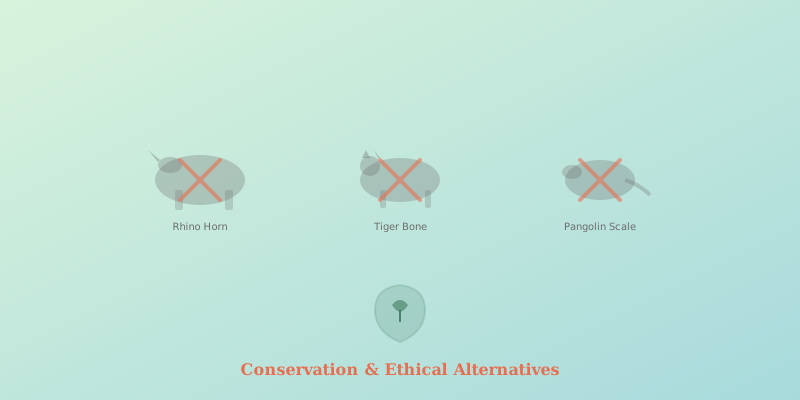
The use of endangered animal products in TCM is the tradition's most significant reputational and ethical challenge. It is also a topic where nuance matters enormously — the problem is real, but the narrative that TCM as a whole drives species extinction is a simplification that ignores both the reform movement within TCM and the environmental impact of other industries, including Western pharmaceutical manufacturing.
The Problem: Animal Products in Traditional Formulas
Historical TCM texts list animal-derived substances alongside plant-based ones. Some that have drawn the most conservation concern:
- Rhino horn (Xi Jiao): Traditionally used to "clear heat and cool blood" in high fever emergencies. Composed primarily of keratin (the same protein in human fingernails), rhino horn has no unique pharmacological properties that cannot be achieved with other substances. Despite this, demand (driven more by status signalling than by medical need) has fuelled poaching that has pushed several rhino species to the brink of extinction.
- Tiger bone (Hu Gu): Used in formulas for bone and joint conditions. Tiger populations collapsed to fewer than 4,000 in the wild. China banned tiger bone trade in 1993.
- Pangolin scales (Chuan Shan Jia): Used to "invigorate Blood and reduce swelling." Pangolins became the most trafficked mammals on Earth. China upgraded pangolin protection to the highest level in 2020 and removed pangolin scales from the official TCM pharmacopoeia.
- Bear bile (Xiong Dan): Contains ursodeoxycholic acid (UDCA), a compound with genuine hepatoprotective properties. However, UDCA has been synthesised since 1954 and is available as a pharmaceutical drug (Ursodiol). Bear bile farming, where bears are kept in small cages with permanent gallbladder catheters, has drawn intense animal welfare criticism.
The Reform Movement
It is crucial to recognise that the strongest voices for reform often come from within the TCM community itself:
- The Chinese government removed pangolin scales from the official pharmacopoeia in 2020 and upgraded pangolin protection to the highest legal category.
- China has banned trade in tiger bone and rhino horn since the 1990s (with brief, controversial exceptions that were quickly reversed under international pressure).
- Major TCM professional organisations have issued statements supporting the use of herbal and synthetic substitutes.
- TCM universities increasingly teach students that animal-derived products have effective herbal alternatives.
- Organisations like the American College of Traditional Chinese Medicine and the World Federation of Chinese Medicine Societies have endorsed conservation-compatible practice.
Effective Substitutes
| Endangered Product | TCM Substitute | Evidence |
|---|---|---|
| Rhino horn (Xi Jiao) | Water buffalo horn (Shui Niu Jiao) | Listed as equivalent substitute in Chinese Pharmacopoeia |
| Tiger bone (Hu Gu) | Dog bone, goat bone, or herbal formulas | Widely accepted in clinical practice |
| Bear bile (Xiong Dan) | Synthetic UDCA (Ursodiol) | Chemically identical; available as pharmaceutical |
| Pangolin scales (Chuan Shan Jia) | Pig hooves (Zhu Ti Jia), vaccaria seeds | Increasingly accepted; pharmacopoeia updated |
Western Medicine's Environmental Impact
For balance, the environmental impact of Western pharmaceutical manufacturing deserves mention:
- Pharmaceutical pollution: Active pharmaceutical ingredients (APIs) contaminate waterways worldwide, affecting aquatic ecosystems. Diclofenac caused a 99% decline in vulture populations in South Asia.
- Antibiotic resistance: Pharmaceutical factory runoff in India and China has been linked to the spread of antibiotic-resistant bacteria.
- Carbon footprint: The pharmaceutical industry's carbon emissions are estimated to be higher than the automotive industry's.
- Animal testing: Western drug development relies extensively on animal testing, with millions of animals used annually.
This is not a "whataboutism" defence of endangered species use in TCM — both problems are real and both demand action. It is a reminder that environmental responsibility is a shared challenge across all medical systems.
The Path Forward
The solution is not to condemn TCM as a whole but to support the reform movement already underway: enforce existing bans on endangered species trade, promote effective substitutes through education and pharmacopoeia updates, fund research into herbal alternatives, and address demand through public awareness campaigns. The TCM community's own leadership on this issue — removing pangolin scales from the pharmacopoeia, endorsing synthetic UDCA, promoting herbal substitutes — demonstrates that tradition and conservation can coexist.
Key Takeaway
The use of endangered animal products in TCM is a serious problem with a viable solution. Effective herbal and synthetic substitutes exist for virtually every endangered-species product. The TCM community is increasingly leading reform from within. Supporting this reform — rather than condemning the entire tradition — is the most productive path to conservation and continued access to traditional medicine.